
Last updated November 16, 2026
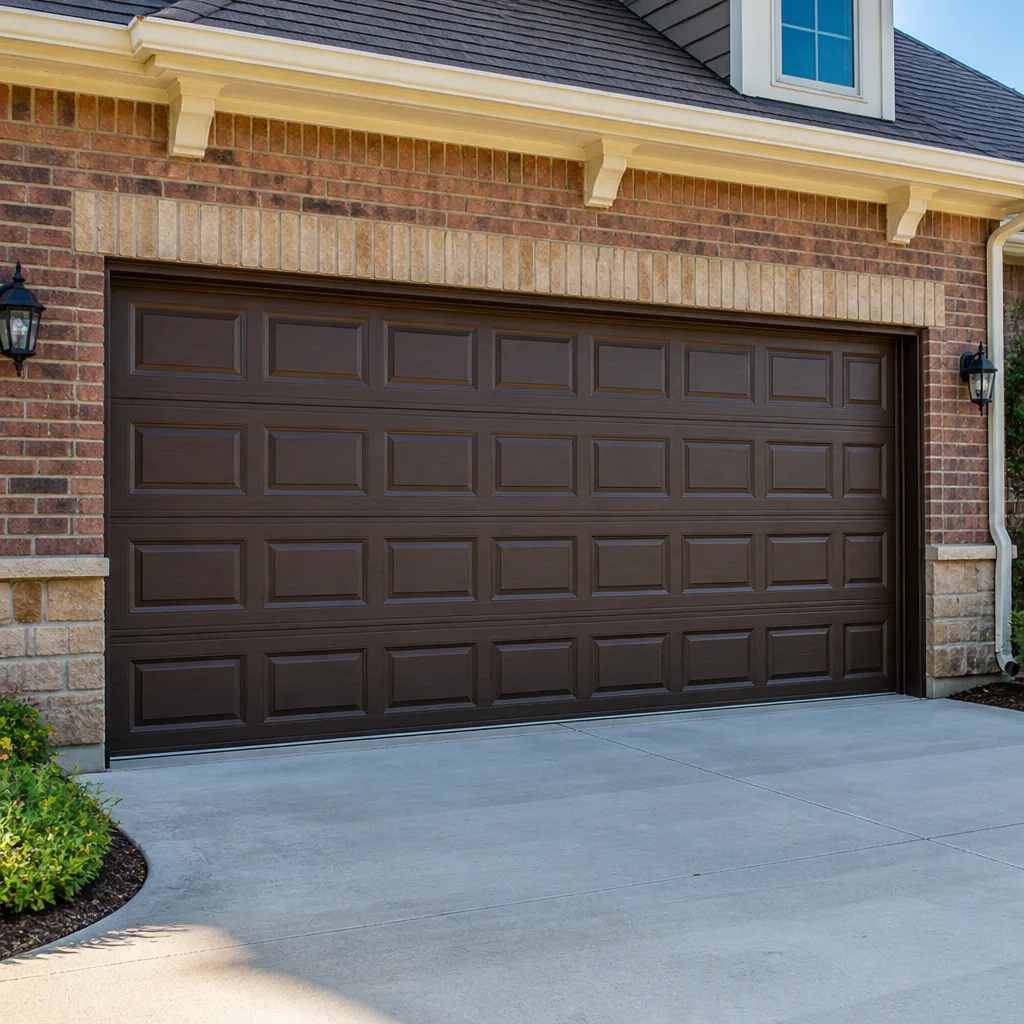 Raised-panel steel
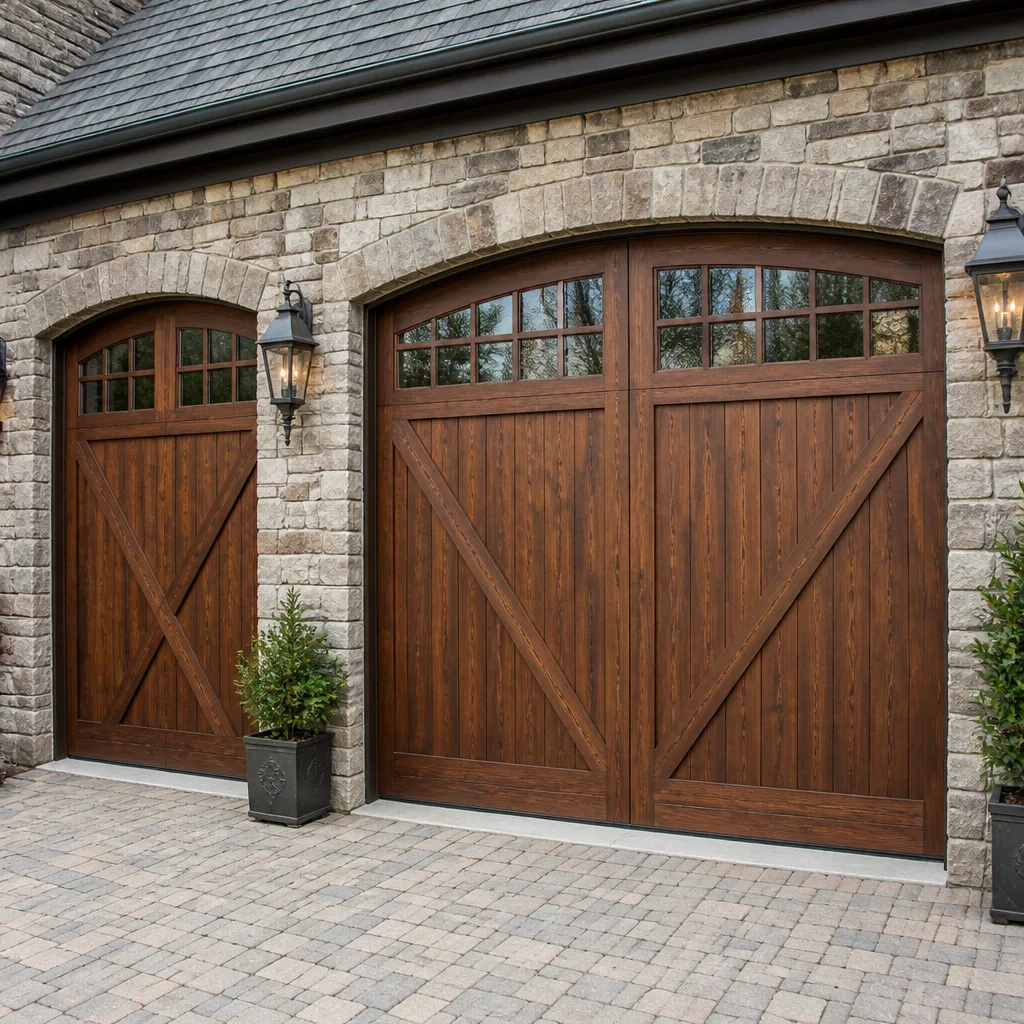 Carriage house
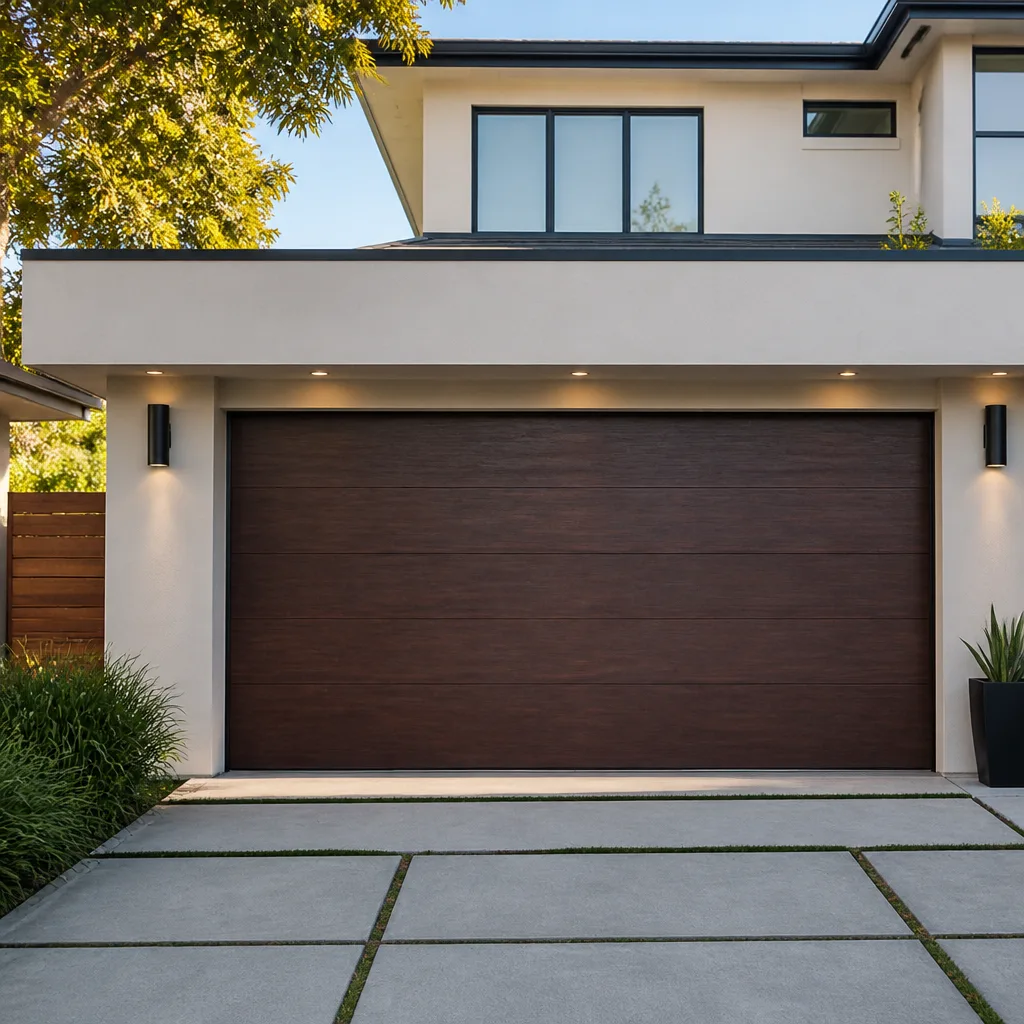 Modern flush
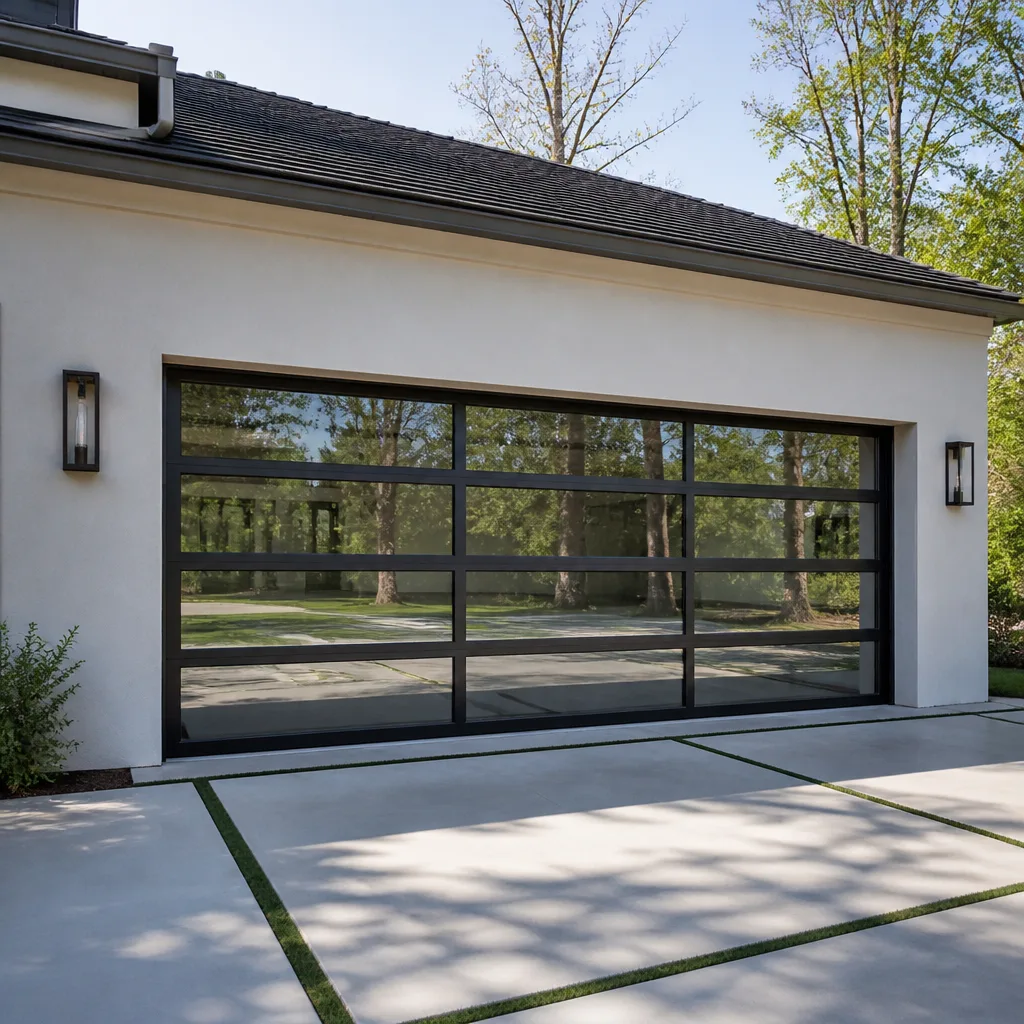 Full-view glass
 LiftMaster openers
 Chamberlain openers
Full 25-point door and opener safety check with every visit - springs, cables, rollers, tracks, and your LiftMaster or Chamberlain opener included
You get a price before we start. It does not change when the pro arrives.
Get your free estimateGarage Door Warning Signs: A Peoria Homeowner’s Reference Guide
A garage door that hesitates for two seconds before it moves isn’t “just getting old.” That hesitation is usually a torsion spring sitting under insufficient tension, and in Peoria’s heat cycle, a spring like that can be weeks from letting go. We’ve watched homeowners ignore that pause for a month and then call us with a door that won’t lift at all. The truth is that most garage door failures announce themselves first: a new grind, a slight sag, a door that reverses on its own in July. This guide explains what each signal means mechanically, how to check the safe ones yourself, and when to stop and call. Reading the signs early turns an emergency into a scheduled repair, and that’s the whole point.
Quick Answer
The most reliable garage door warning signs are a door that pauses before moving, grinding or popping sounds, a visible gap or bend in a track, frayed cables, worn roller heads, and an opener that reverses without hitting anything. Any one of these means the door should be inspected by a specialist before it’s used again. In Peoria, the heat itself accelerates the wear that produces these signals, so the same door here can fail sooner than the same door somewhere cooler.
Styles & brands we work with
- Raised-panel steel
- Carriage house
- Modern flush
- Full-view glass
- LiftMaster openers
- Chamberlain openers
Table of Contents
- What Your Garage Door’s Noises Are Telling You
- Visual Warning Signs You Can See From the Ground
- Why Peoria Heat Makes Tracks Bind and Springs Fail
- The 60-Second Door Balance Test
- Opener Warning Signs: When It’s the Motor and When It Isn’t
- Why Your Door Reverses in Summer: The Sensor Gap
- Common Mistakes to Avoid
- When to Call a Professional
- Frequently Asked Questions
What Your Garage Door’s Noises Are Telling You
Every garage door makes some sound. The useful skill is telling the sound that belongs to a normal door from the sound that belongs to a failing part. In our experience, homeowners describe four noises most often, and each one points somewhere different. Listen with the door closed, then open it once and pay attention to where the sound starts and where it stops.
- Grinding. Metal-on-metal grinding usually comes from the opener’s drive mechanism or from dry, worn rollers dragging in the track. If the grinding is constant while the door moves, suspect the opener. If it’s intermittent and travels with the door, suspect rollers or hinges.
- Squeaking. A high, regular squeak is friction. Roller stems, hinges, and the torsion shaft are the usual culprits. A squeak that appears suddenly after a spell of hot, dry weather in Peoria is often metal-on-metal contact where the original lubricant has cooked away.
- Popping. A sharp pop, especially when the door first starts to lift, is the sound you take most seriously. It can indicate a torsion spring that’s lost tension or a cable shifting in its drum. Stop using the door and get it inspected.
- Rattling. Loose bolts on the hinges, a sloppy roller in a worn track, or a panel fastener that’s worked loose. Rattling is usually the cheapest of the four to correct, but it can also be the first sign a hinge has cracked.
A quick way to reason about it: grinding points to the opener, squeaking to friction, popping to stored tension, rattling to loose hardware. When a popping sound shows up at the top of the door’s travel, don’t run the door again until a trained technician has looked at it. Torsion springs and their cables carry enormous stored force, and this is not a component to inspect by hand. Our garage door repair team diagnoses the noise at the source, whether your door uses a Raynor or a LiftMaster system, instead of guessing.
Visual Warning Signs You Can See From the Ground
You don’t need to climb a ladder to catch most garage door wear. Standing safely on the ground, with the door closed and the opener disconnected or powered down, you can look at the parts that fail most often. Here’s what to look at and what “worn” actually looks like.
- Torsion spring. Look at the coiled spring above the door. A healthy spring is a tight, even coil painted a consistent color. A spring with a visible gap in the coil, loose windings, or a gap where it’s supposed to be attached to the center plate has lost tension or already broken. Stop here and call.
- Cables. Lift cables run down each side behind the door. A healthy cable is a smooth, tight bundle of wire with an even lay. Worn means: stray or “birdcaged” strands sticking out, kinks, or rust bloom along the length. Frayed cables snap without warning, so these get replaced, not nursed along.
- Rollers. Look at the small wheels that ride in the track. A good roller is round, and the stem is tight. Worn means: a flat spot, a wobble when you nudge it, or a head that has ground itself into an oval. Rollers are among the cheapest parts to replace and among the most common causes of a door that jumps or drags.
- Hinges and panel fasteners. Rust streaks, cracks at the bend of a hinge, or a fastener backing out. A single cracked hinge can let a panel sag and start scraping the track.
- Tracks. Run your eye down each vertical and horizontal track. A bend, a dent, or a segment that’s pulled away from its mounting is a sign the door has been hit or has drifted.
Notice what you’re doing here: looking, not touching. Anything that involves reaching above the door or into the spring area belongs to a technician. If what you see makes you uneasy, take a photo from the ground and use it when you call.
Why Peoria Heat Makes Tracks Bind and Springs Fail
Peoria’s summers push garage door hardware through a daily expansion and contraction cycle that shorter, cooler seasons elsewhere simply don’t. A steel track that runs true at dawn can be out of alignment by mid-afternoon. Homeowners often feel that seasonal binding and assume the opener is failing, because the door gets stiff and the motor sounds like it’s working harder. Usually it’s the track, not the motor.
Here’s the pattern we see: the metal track expands in the afternoon heat, and a set of rollers that had clearance in the morning is now pinched slightly. The door drags, the opener strains, and the motor heats up because it’s pushing against friction it wasn’t designed for. In cooler months the same door runs fine, which makes the problem feel intermittent and mysterious. The fix is usually to realign the track and check the roller clearance, not to replace the opener. Diagnosing it the other way around is a common and expensive mistake.
Heat does the same thing to springs and lubricants. Torsion springs are under constant tension and the daily thermal cycle fatigues them faster where summer heat is sustained. Lubricant on hinges and roller stems dries and thins more quickly too, which is why a door that was quiet in spring starts squeaking by July. That’s not a reason to panic. It is a reason to check the door once a season and keep the moving parts clean and lightly lubricated. A door that’s inspected before summer usually spends the hot months running as it should.
The 60-Second Door Balance Test
The balance test tells you whether your springs are doing their job. It’s quick, it’s safe if you do it exactly as described, and the result is one of the clearest signs of spring health you can get without a ladder.
- Close the door fully.
- Pull the opener’s manual release cord so the door is disconnected from the motor. It should now move by hand.
- Lift the door by hand to about waist height, then let go without pushing or pulling.
- Watch what happens. A well-balanced door stays where you left it. A door that slams down or sags has springs that have lost tension. A door that floats up on its own is over-tensioned.
- Reconnect the opener when you’re done.
What the result means: a door that drops is the signal to stop using the opener until the springs are checked. A door that stays put is doing what it should, and the springs are carrying their share of the load. A door that rises on its own is unusual but not harmless. Either way, the test is information, not a repair. You never adjust the springs yourself. A torsion spring that’s been let down and re-wound is a task for someone trained to do it, because the stored energy in one can cause serious injury if it slips. If your door fails the balance test, that’s a call, not a project. You can reach us at (833) 620-5171 for a free estimate, with fast dispatch from 7am to 7pm. We answer 24/7.
Opener Warning Signs: When It’s the Motor and When It Isn’t
Homeowners tend to blame the opener for everything. In our experience, more than half of the “my opener is dying” calls are actually a door or track problem the opener is struggling against. That matters because replacing an opener when the real fault is friction doesn’t fix anything, and it wastes money. Here’s how to separate the two.
- Signs it’s the opener. The light flickers unpredictably. The motor runs but the door doesn’t move, even with the door disconnected. The unit beeps or clicks and does nothing. Remote range drops off. These point to the opener mechanism itself, and our garage door opener repair handles the diagnosis across LiftMaster, Chamberlain, Genie, and the rest of the major brands.
- Signs it’s the door, not the opener. The opener strains but the door moves a little. The door is stiff when you move it by hand. The motor sounds loud and hot after one cycle. Tracks are out of line. Rollers are worn. In these cases the opener is fine and the door needs attention.
- Signs it’s the safety reverse. The door starts down, hits resistance that isn’t there, and reverses. That’s a safety system doing its job, and the cause is often the sensor, not the motor. See the next section.
Because we work on the brand you already have, you’re never pushed toward a full system replacement just because a technician isn’t familiar with your opener. We repair the mechanism first and replace only when the part genuinely can’t be saved. That’s the difference between a fast diagnosis and a sales pitch.
Why Your Door Reverses in Summer: The Sensor Gap
A door that reverses unexpectedly in summer is often not an electrical fault at all. It’s a heat-expanded safety sensor gap. The two photo-eye sensors sit at the bottom of the door’s tracks and talk to each other in a straight line. When the mounting brackets, the track, or the floor shift with the heat, that line can move just enough to break the beam or misalign the pair. The opener reads that as an obstruction and reverses, exactly as it was designed to.
What to check, safely, without touching the moving part of the door: look at both sensors at the bottom of the tracks. Are the indicator lights on and steady? Is one lens dirty, fogged, or bumped out of line? Is there anything – a leaf, a bit of debris, a lawn chair – in the beam path? If the lights are off or blinking when nothing is in the way, the sensors need re-aiming or the brackets need attention. If the door reverses even with the sensors aligned and unobstructed, the cause is more likely a limit setting, a worn spring that’s throwing off the force needed, or an opener issue.
In Peoria, this pattern shows up most in the afternoon heat and disappears in the morning, which makes it easy to dismiss. Don’t. A door that reverses unpredictably is a door that can crush something or someone if the safety system is masking a bigger fault. If you’ve cleaned and checked the sensors and the door still reverses, get it looked at. Our team diagnoses the whole system, door and opener together, so we don’t chase the wrong part.
See the difference
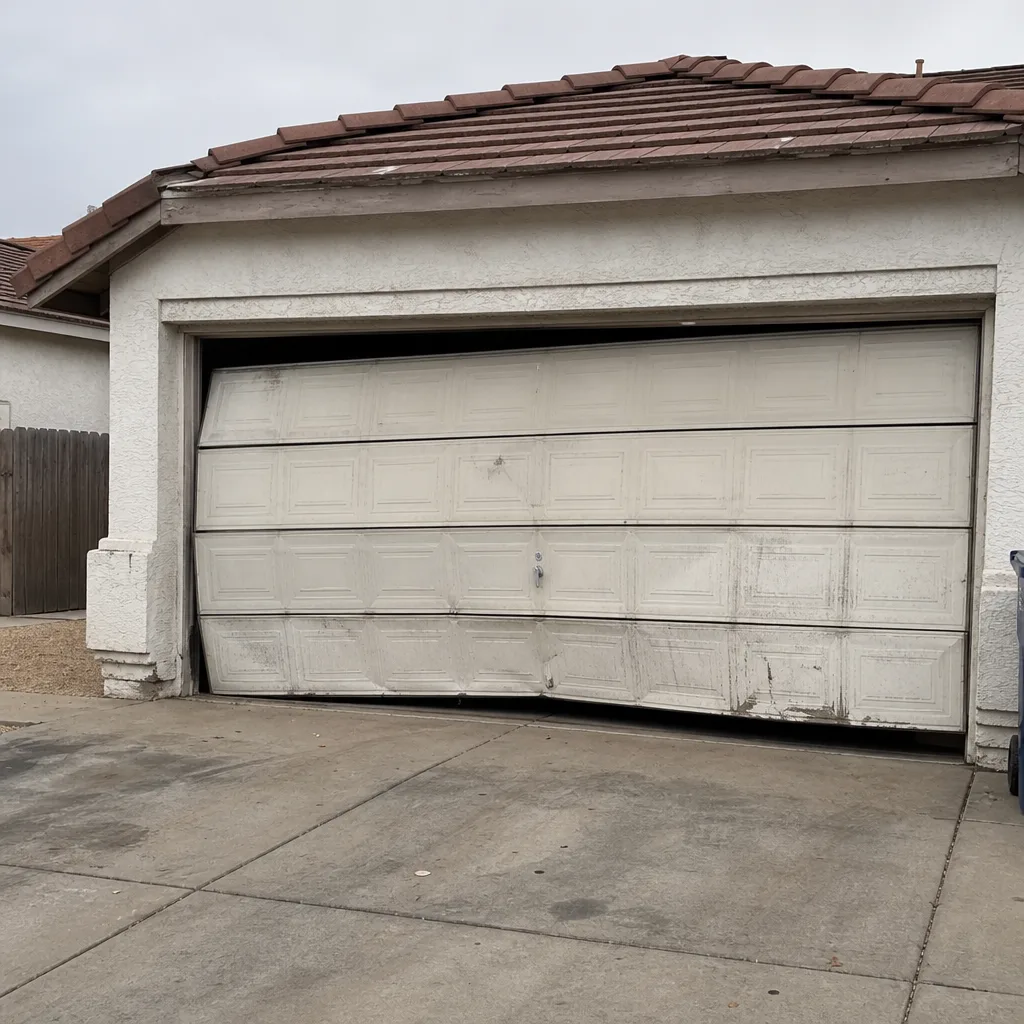 Before
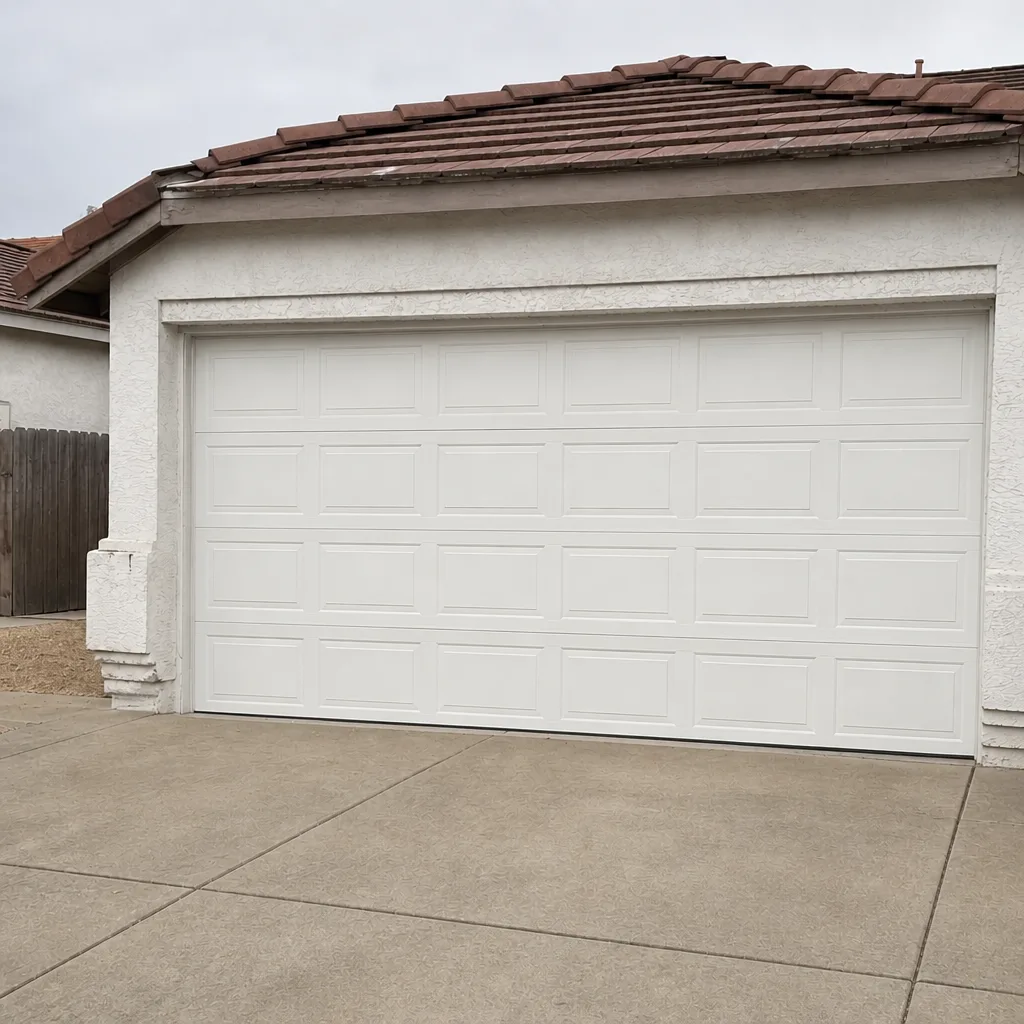 After
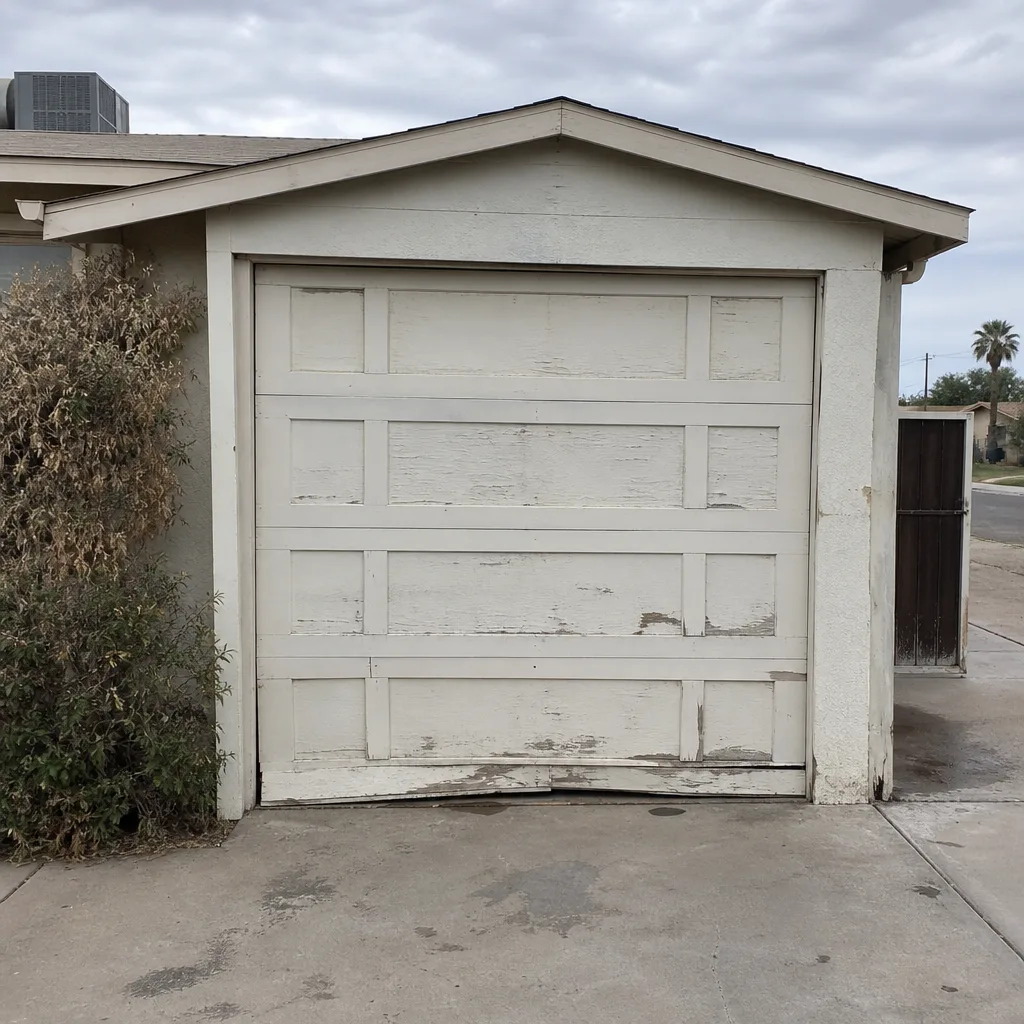 Before
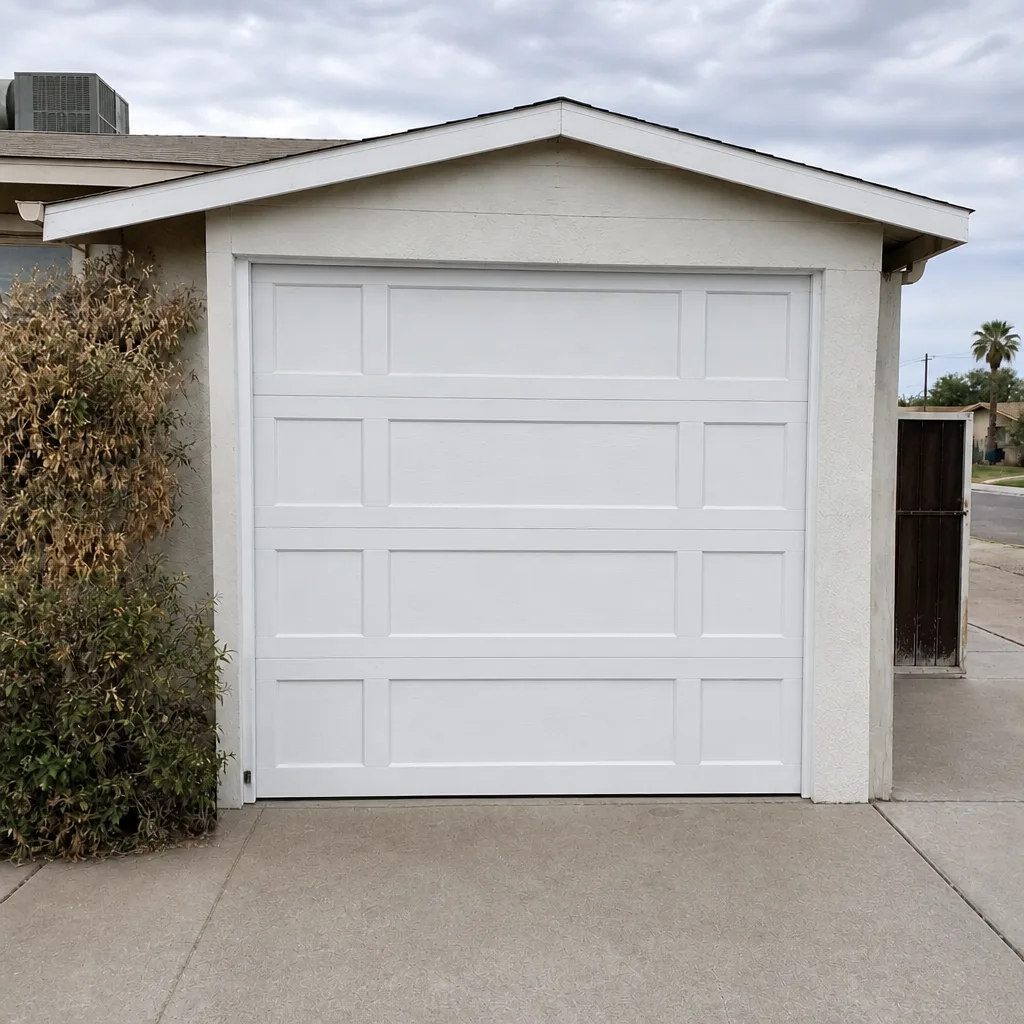 After
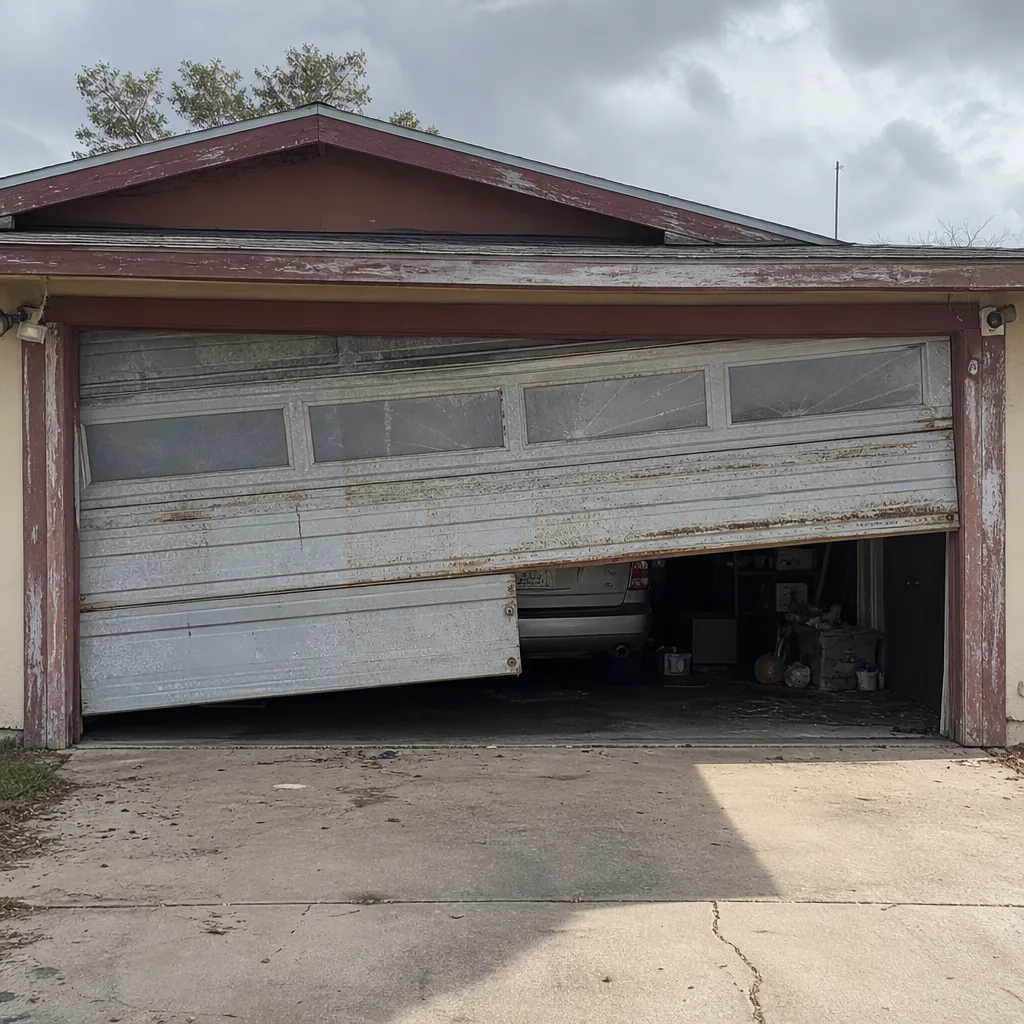 Before
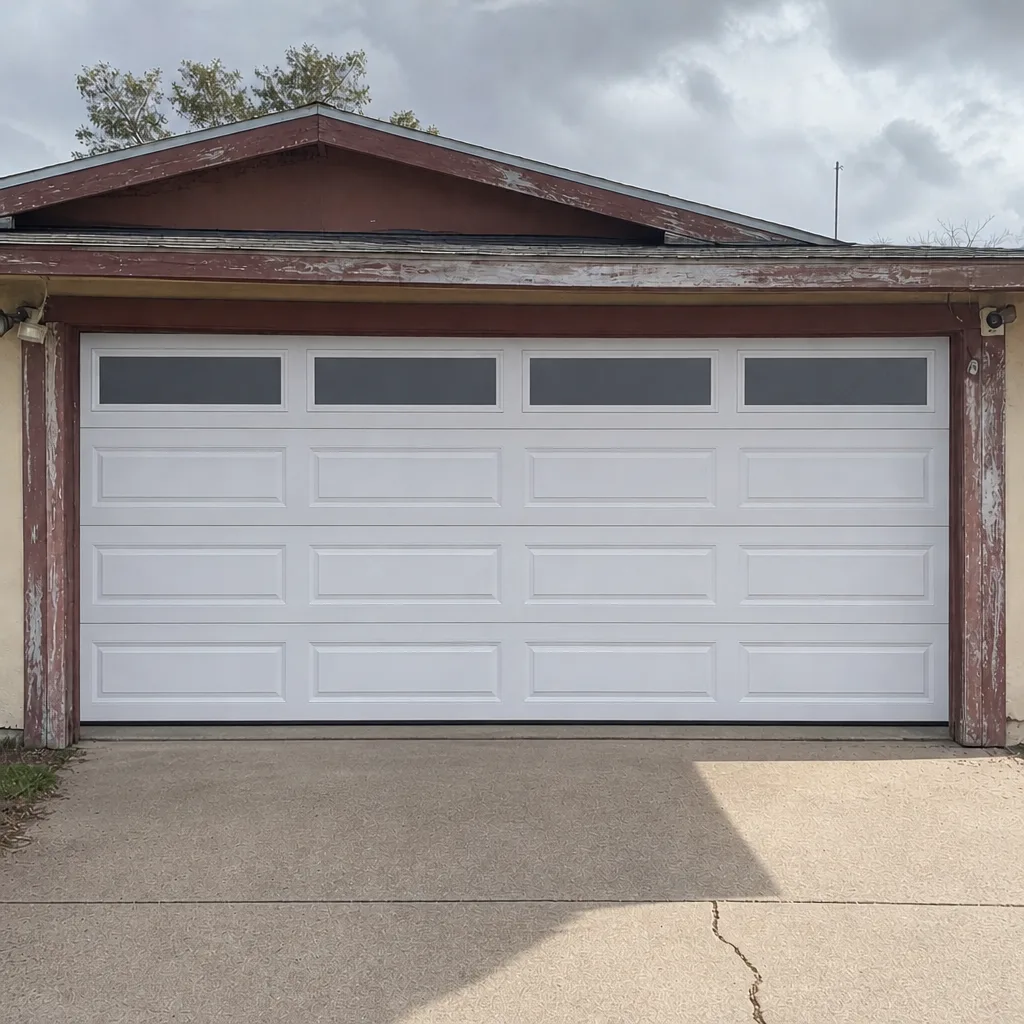 After
Common Mistakes to Avoid
- Ignoring a pause before the door moves. That pause is the earliest and most reliable sign of a losing spring. Waiting until the door won’t lift at all means the door fails when you least expect it, usually on a busy morning.
- Blaming the opener for a track problem. Seasonal binding in Peoria heat is almost always the track, not the motor. Replacing a working opener because the door drags is money down the drain.
- Touching the torsion spring or cables. These carry stored force that can injure seriously if released wrong. Look from the ground, test the door by hand, and leave the spring work to a trained technician.
- Greasing tracks. Lubricant belongs on hinges, roller stems, and the torsion shaft. Track surfaces attract grit and dirt when they’re greased, which makes wear worse.
- Skipping the seasonal check. A quick look at springs, cables, and rollers once a season catches most of what goes wrong before it becomes a repair. In Peoria, do it before summer, not after.
- Adjusting force or limit settings to force a stiff door to close. This masks the real problem and defeats the safety reverse. If the door needs more force to close, the door needs fixing.
When to Call a Professional
Call a professional when you have a popping or grinding noise that won’t go away, a spring with a gap or a broken coil, a frayed cable, a door that fails the balance test, a door that reverses on its own, a visible bend in a track, or a panel that has come loose. These aren’t jobs for a homeowner with hand tools, and handling a torsion spring or a stretched cable wrong can cause serious injury. If the door is stuck in the down or up position and can’t be moved safely, stop using the opener and call. Stellar Garage Door Service offers free estimates in Peoria. Call (833) 620-5171. We answer 24/7. Fast dispatch from 7am to 7pm, Sunday through Friday. Every price is quoted and agreed before any work begins.
Frequently Asked Questions
Most garage door repairs in Peoria fall in an estimated range of $150 to $450 depending on the part, with spring replacements typically running about $180 to $340 per spring. A matched pair is usually replaced together, so a pair costs about twice a single spring. The written estimate sets the final price, and we quote it before any work starts. For an exact quote, call (833) 620-5171.
For repairs, yes, same-day service is usually possible. Call (833) 620-5171, and we’ll book the soonest opening, Sunday through Friday, 7am to 7pm. We answer 24/7. Installation work is measured and scheduled, not same-day.
The earliest sign is a door that pauses for a second or two before it opens, along with a spring that has lost its even tension. Look for a visible gap in the coil or loose windings when the door is closed. If you see either, stop using the door and call for an inspection.
Heat shifts the track and the sensor brackets, which can nudge the safety beam out of line and make the door reverse. Check that the sensor lenses are clean and their lights are steady, and that nothing is in the beam path. If the door still reverses, the cause is likely the sensors, a worn spring, or the opener, and it needs a diagnosis.
Yes, the technicians who work on your door are licensed and insured. They work on the brand you already have, whether that’s Raynor, LiftMaster, Chamberlain, Genie, or the other major names, so you’re never pushed toward replacement just because of the brand. Call (833) 620-5171 for a free estimate.
No. The written estimate sets the price, and it’s agreed before any work begins. If we find something different on arrival, we tell you before touching the door and you decide. Call (833) 620-5171 for an exact quote. Estimates are free.
The Bottom Line
Garage door failures almost always give notice first. A pause before the door moves, a new grind, a frayed cable, a spring with a gap, a door that reverses in the afternoon heat: each one is a signal you can read safely from the ground. In Peoria, the summer heat accelerates wear on tracks, springs, and lubricants, which makes a seasonal check more useful here than in cooler climates. Catch the signs early and the fix stays a scheduled repair. Ignore them and the door decides the schedule for you. Whether you need garage door repair, garage door opener repair, or a new installation, Stellar Garage Door Service is here for it. Garage doors are all we do, and we’ve built our focus around the eight major brands you’re most likely to own. If you’d like a professional eye on your door, call (833) 620-5171 for a free estimate. We serve homeowners across Peoria and the surrounding area. We answer 24/7, with fast dispatch from 7am to 7pm, Sunday through Friday. For a fuller look at our work, visit Stellar Garage Door Service.
Written by the team at Stellar Garage Door Service.