
Last updated November 16, 2026
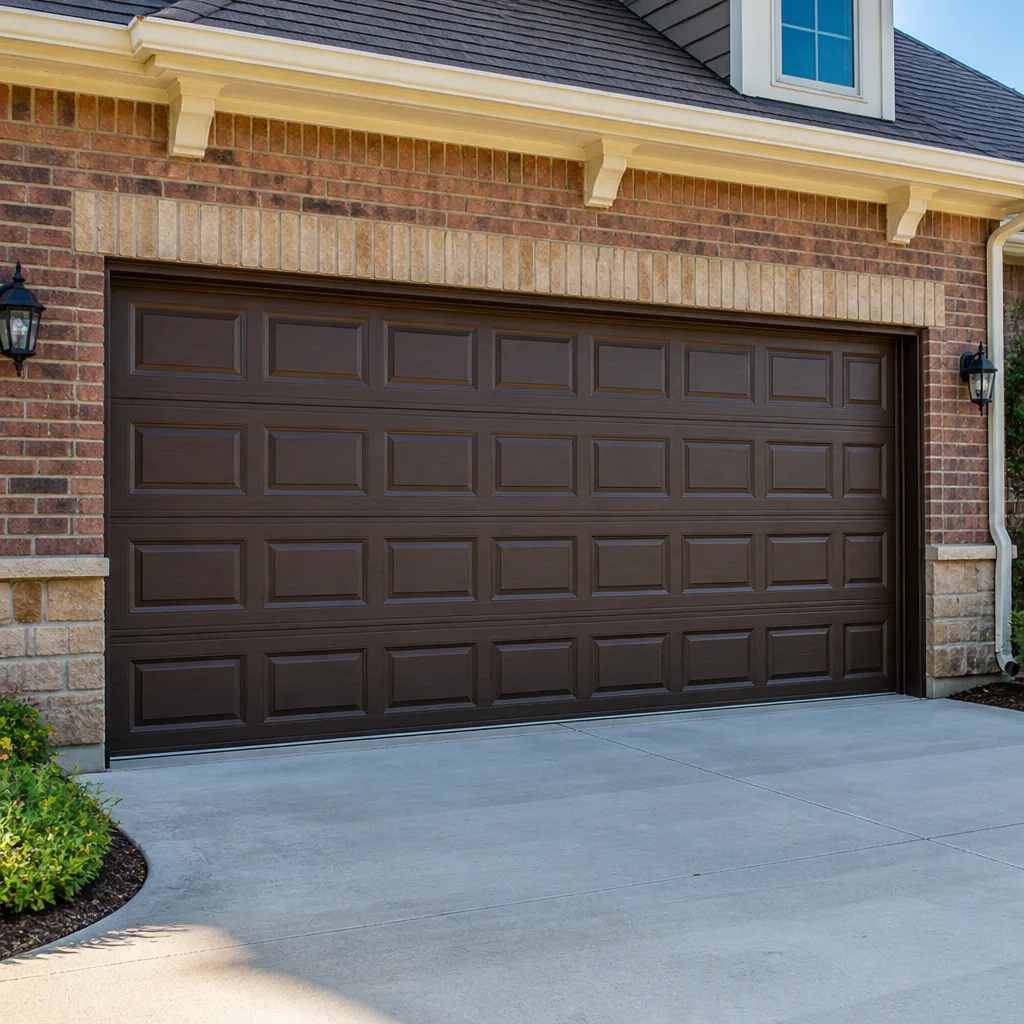 Raised-panel steel
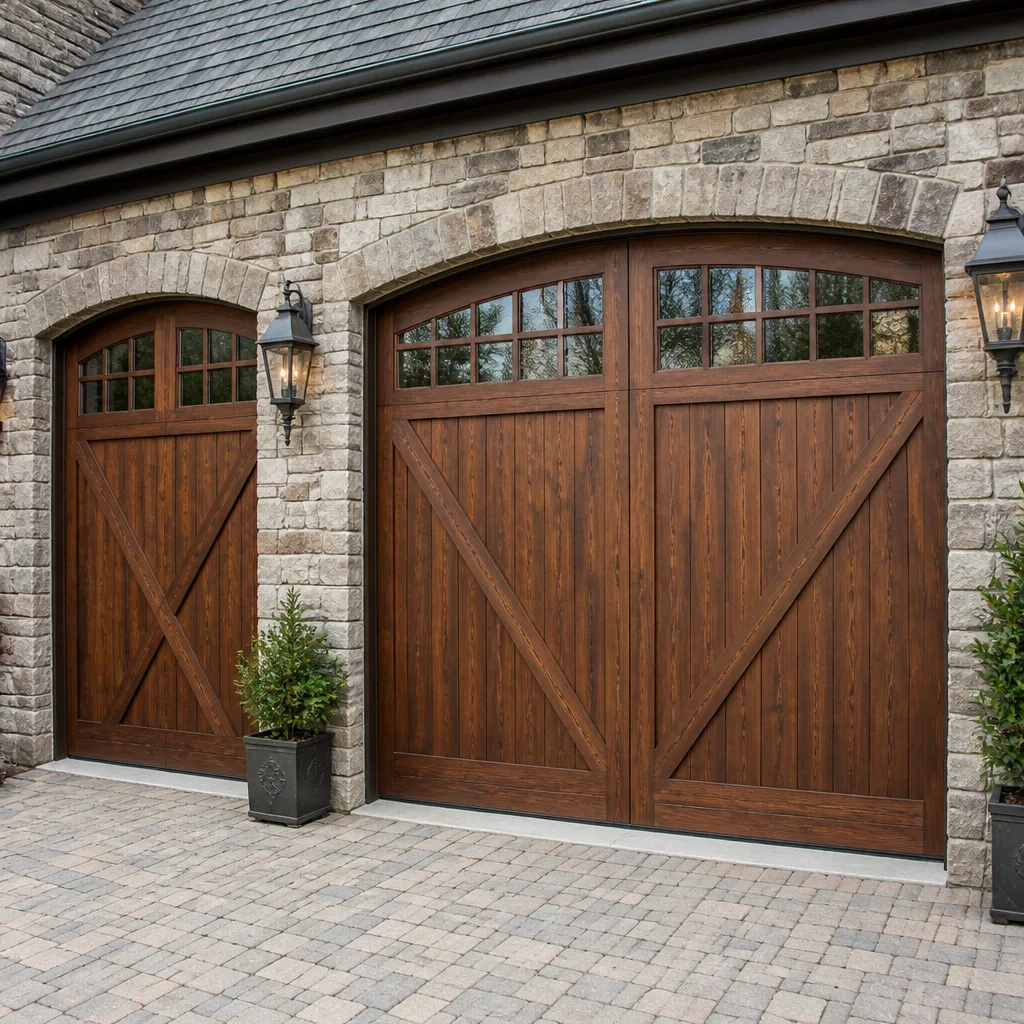 Carriage house
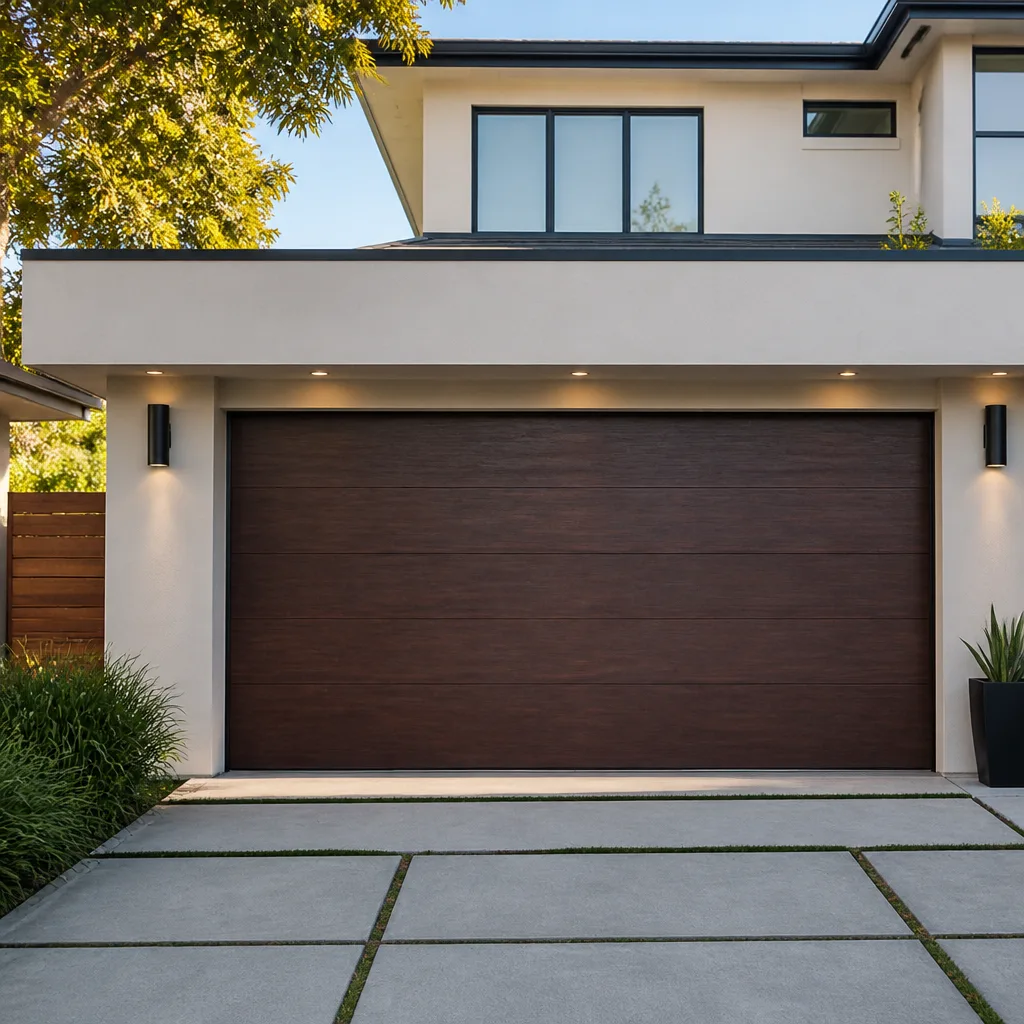 Modern flush
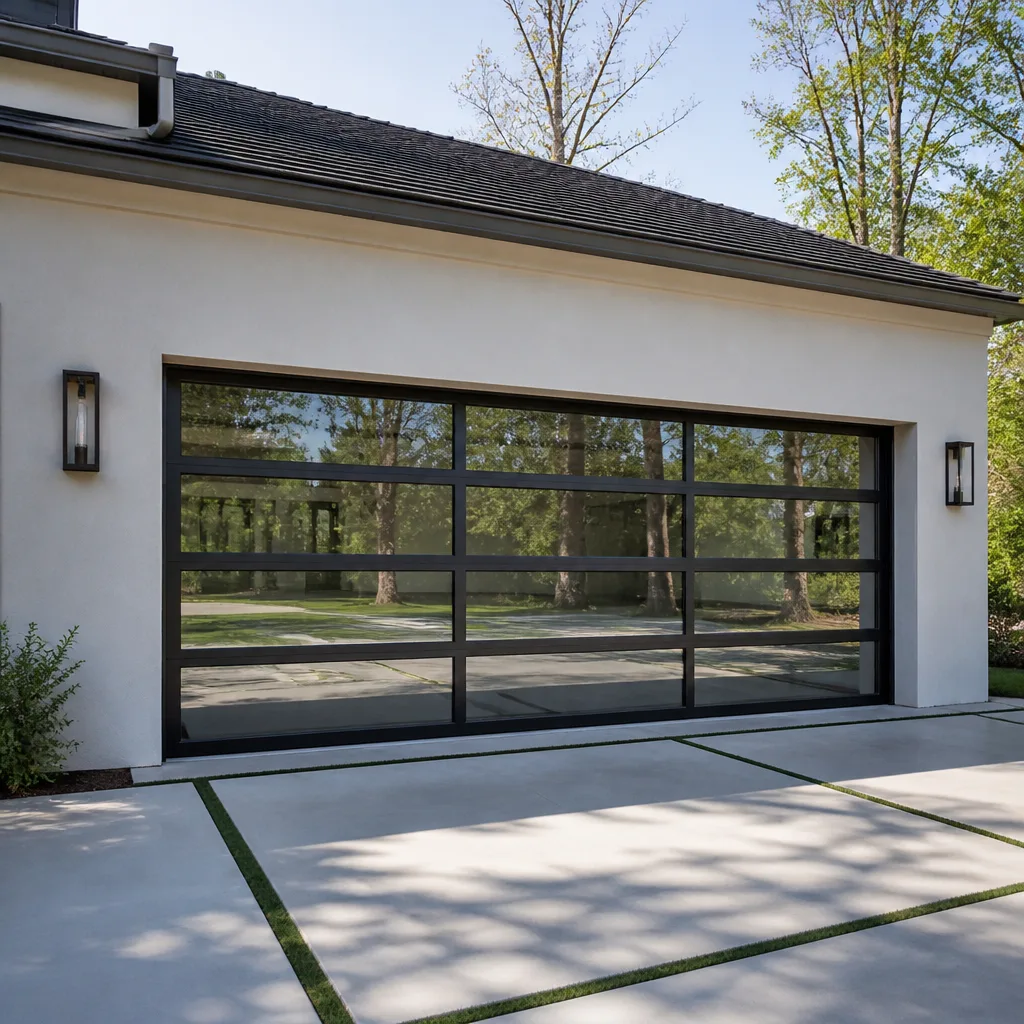 Full-view glass
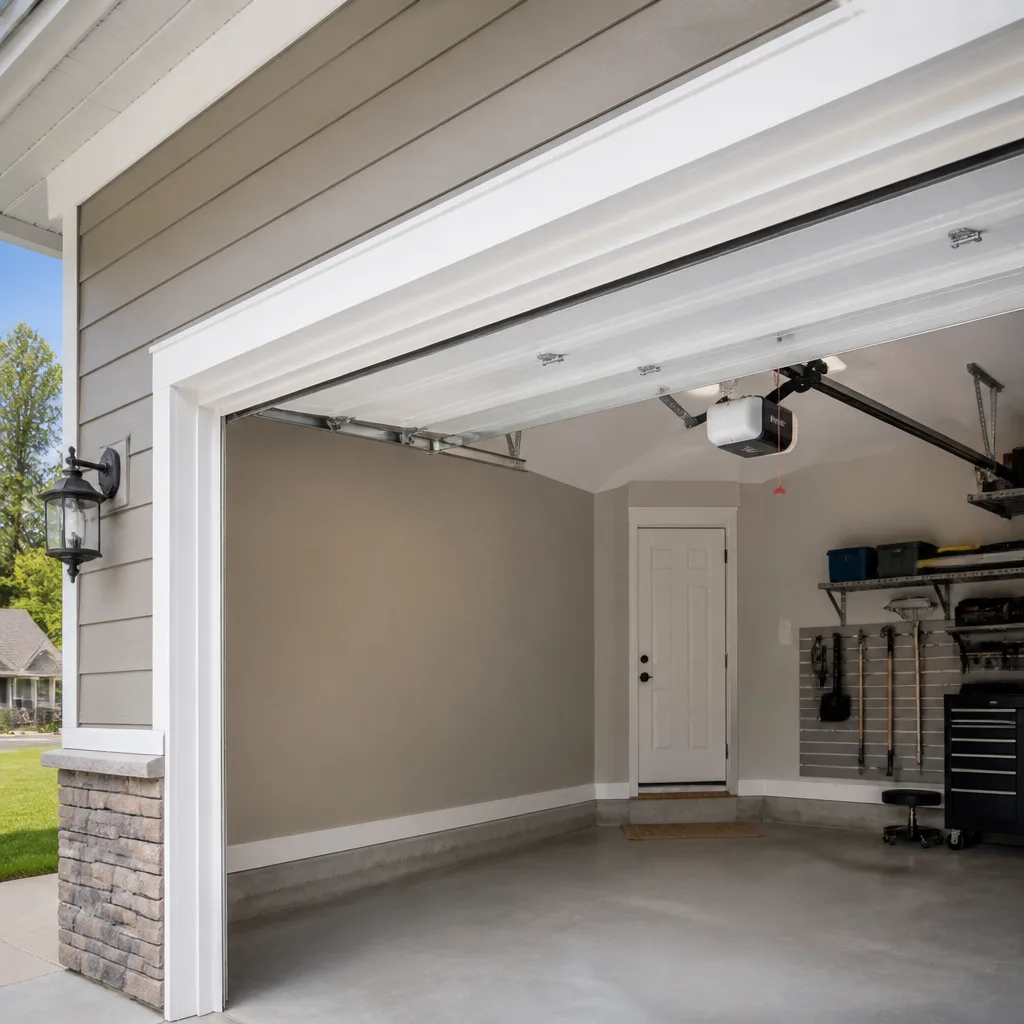 LiftMaster openers
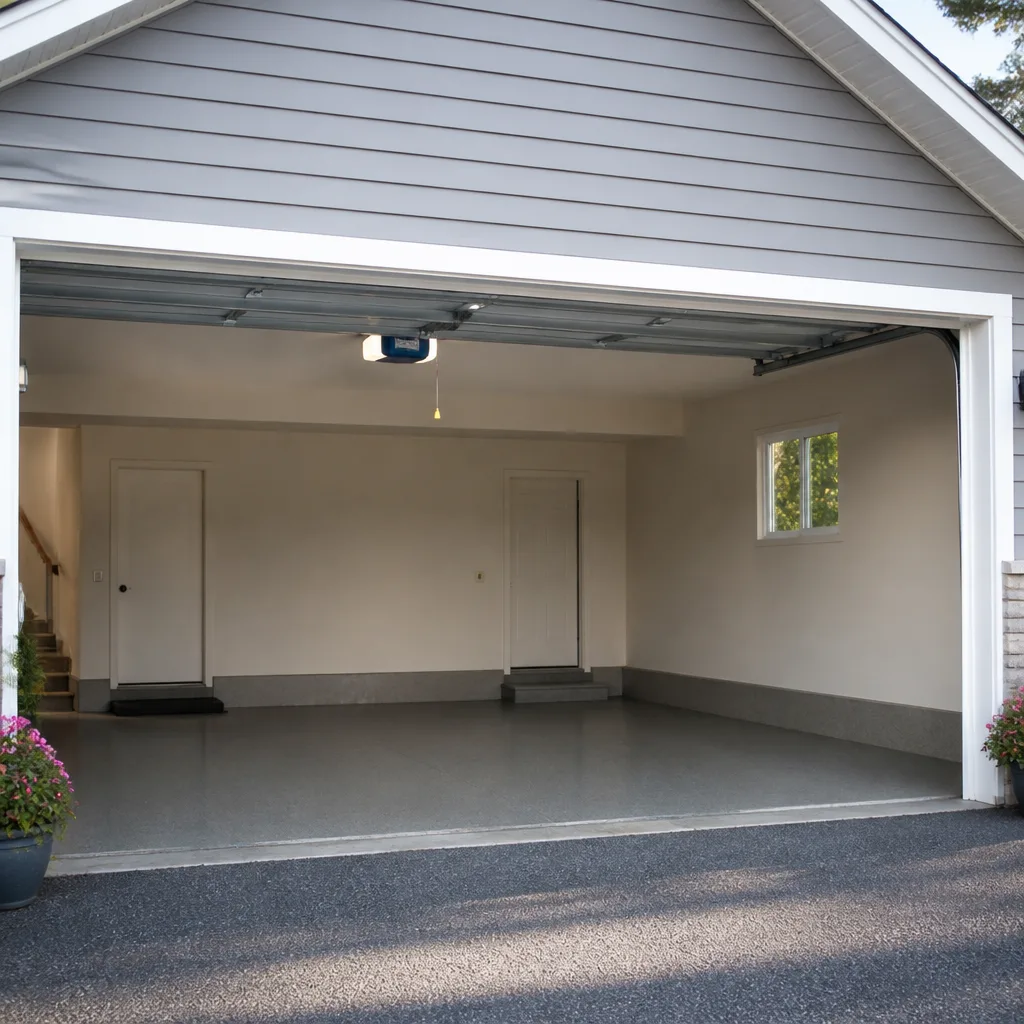 Chamberlain openers
Full 25-point door and opener safety check with every visit - springs, cables, rollers, tracks, and your LiftMaster or Chamberlain opener included
You get a price before we start. It does not change when the pro arrives.
Get your free estimateThe Complete Guide to Garage Doors in Peoria
Most garage door advice you’ll find online was written somewhere with four seasons and a stretch of freezing weather. Peoria gets the opposite: weeks at a time over 110°F, a UV index that stays punishing from spring into fall, and dust storms that push fine grit into every seam on the front of your house. Your garage door takes all of that on the biggest opening in your home. In our experience, the “standard” guidance quietly shortens a Peoria door’s life, and the failure isn’t dramatic. It’s gradual. This guide explains how materials, orientation, insulation, and storm exposure play out in Peoria specifically, what a typical door costs, and how to tell repair from replacement.
Quick Answer
A well-chosen garage door in Peoria usually runs $1,100 to $5,500 installed depending on material and size, and a top-section replacement or spring repair typically costs $180 to $340. The biggest local factors are sun exposure (south- and west-facing doors age faster), panel material (steel holds up best to heat and UV, wood needs more upkeep, composite sits in between), and dust-storm wear on bottom seals and tracks. Match those to your home and your door will last far longer.
Styles & brands we work with
- Raised-panel steel
- Carriage house
- Modern flush
- Full-view glass
- LiftMaster openers
- Chamberlain openers
Table of Contents
- How Peoria’s Heat and UV Affect Every Part of Your Door
- Steel vs. Wood vs. Composite: Realistic Degradation Timelines
- South-Facing vs. North-Facing: Insulation and Orientation
- Dust Storms (Haboobs) and Your Bottom Seal and Tracks
- Which Door Styles Fit Peoria’s Architecture and Protect Resale
- How to Read a Garage Door Spec Sheet for Desert Performance
- What Garage Door Work Costs in Peoria
- Repair or Replace? A Simple Decision Method
- Common Mistakes to Avoid
- When to Call a Professional
- Frequently Asked Questions
How Peoria’s Heat and UV Affect Every Part of Your Door
A garage door in Peoria faces the same sun a door in a cooler climate does, only more intensely and for longer stretches. Heat doesn’t break a door in one dramatic moment. It ages it from the inside out: the metal expands and contracts daily, paint and finishes fade, plastic and rubber soften, and springs take on stress they weren’t tested for. Understanding where the wear actually happens helps you catch it before it becomes a repair bill or a broken door.
The parts that fail first in our experience:
- Bottom seals and weatherstripping. Rubber that spends months baking against hot concrete hardens and cracks. This is the number one sun-related failure we see in Peoria.
- Springs. Heat accelerates metal fatigue on torsion and extension springs. A spring that would last years somewhere mild may show signs of strain sooner when the door sits in continuous heat.
- Paint and finish on steel and wood panels. UV exposure fades paint even on quality finishes. A faded or chalky panel isn’t cosmetic only; it’s a sign the protective layer is wearing thin.
- Paint and finish on wood panels. Wood needs more frequent re-sealing here. Left alone, sun-dried wood will crack and swell.
- Rivets, rollers, and hinges. Repeated daily expansion and contraction can loosen hardware over time, which is why an occasional rattle is worth checking rather than ignoring.
The pattern is consistent: the sun-exposed face of the door shows wear years ahead of the shaded face. That’s why orientation matters so much in Peoria (more on that below) and why the same door model can perform very differently depending on where it sits on a house.
Steel vs. Wood vs. Composite: Realistic Degradation Timelines
Material choice drives how much care a Peoria door needs and how long it lasts. There’s no single “best” material; there’s the best material for your home, your shade situation, and your willingness to keep up with maintenance. Here’s how the three common choices typically hold up under Peoria conditions.
Steel
Steel is the most common choice in Peoria and the most forgiving. It resists heat well, holds paint longer than wood, and a factory-baked finish survives UV far better than shop-applied paint. Expect a well-made steel door to look good for many years with only occasional washing. The weak points are dents from impacts and rust where the finish is scratched or where a bottom seal has started to trap moisture.
Wood
Wood delivers the look people want on Mediterranean and Spanish-styled homes, and it’s the most demanding choice in this climate. Sun and dry air crack it; paint fades and peels faster. Expect to re-seal or repaint a wood door more often than the other two materials. Homeowners who love the look and don’t mind the upkeep are happy with it. Homeowners who want to install and forget usually aren’t.
Composite and Faux Wood
Composite doors aim for the wood look with less upkeep. They handle heat and UV better than wood, resist cracking, and take less frequent refinishing. They cost more upfront than a basic steel door, so the value depends on how closely you want the wood aesthetic and how much maintenance you’re trying to avoid.
A quick comparison of what to expect:
- Steel: longest low-maintenance life, best UV resistance, watch for dents and scratched finish.
- Wood: best look, highest upkeep, cracks and fades fastest if not resealed.
- Composite: middle ground, wood appearance, less upkeep than real wood.
South-Facing vs. North-Facing: Insulation and Orientation
Here’s something national guides rarely mention: in Peoria, the direction your garage door faces changes how hard the sun works on it. This matters both for appearance and for how much heat gets into the space behind it.
A south- or west-facing door takes direct sun for the hottest part of the day. Its finish fades first, its seal hardens fastest, and the wall of the home behind it gets more radiant heat. A north- or east-facing door is shaded through the hottest hours and typically ages more slowly.
That difference should shape two decisions:
- Insulation. A door facing south or west benefits most from an insulated door, because it’s the one absorbing the brunt of the sun’s energy. Insulation slows heat transfer into the garage. For an attached garage that shares a wall with living space, an insulated door also helps keep the rooms behind that wall from picking up extra heat.
- Finish and seal choice. If your door faces south or west, a tougher factory finish and a more durable bottom seal will pay for themselves. It’s the door that will be fighting the sun every day.
Insulation is measured by R-value, a rating of how well a material resists heat flow. Higher is better. In Peoria’s climate, an insulated door is most worth the cost on a south- or west-facing door on an attached garage. A detached, shaded garage is a much lower priority. We’ll cover how to read those ratings below.
Dust Storms (Haboobs) and Your Bottom Seal and Tracks
Peoria sits in the West Valley, and West Valley dust storms are a real seasonal force. A haboob throws fine, abrasive grit against your door. It doesn’t usually break anything outright, but it attacks the two weakest points of the system: the bottom seal and the track alignment.
Here’s what that wear looks like over time:
- Grit under the bottom seal. Fine dust settles on the driveway and floor, and the door closes onto it. Over many cycles, grit gets trapped against the seal, wearing it down and letting more dust slip underneath.
- Seal that no longer sits flat. A hardened, worn seal that once blocked the gap can lose contact. That leaves a slit under the door that lets in dust, heat, and light.
- Tracks out of alignment. Wind-driven grit works into the track and roller interface. If it isn’t cleaned out, the door runs less smoothly and the rollers wear faster. Tracks rarely bend from wind, but they collect debris that makes the door work harder.
After a storm season, it’s worth checking that your bottom seal still makes full contact with the ground and that the door rises and lowers without snagging. If the seal has hardened or torn, replacing it is a small job that protects everything else. If the door shudders or the track looks off, that’s worth a look before it turns into a stuck door.
Which Door Styles Fit Peoria’s Architecture and Protect Resale
Peoria’s neighborhoods span a range, from established communities to newer West Valley subdivisions. The dominant architecture leans toward the warm, desert-appropriate palettes you see across the Phoenix metro: stucco walls, tile roofs, courtyards, and a lot of Spanish, Mediterranean, and Southwestern styling. The garage door is one of the largest visual surfaces on the front of these homes, so its style does real work for curb appeal.
The styles that tend to fit best:
- Carriage-style and raised-panel doors that read as warm and traditional, which complements stucco and tile.
- Short-panel and flush designs on more contemporary homes, where clean lines fit better than heavy ornamentation.
- Wood-look finishes (real wood or composite) on homes trying to match heavy wooden entry doors or Spanish detailing.
Why this matters for resale in the Phoenix metro: a garage door that clashes with the house’s architecture is one of the first things a buyer notices, because it’s so big and so visible from the street. The same panel design that looks right on a contemporary build can look wrong on a Mediterranean-style home and vice versa. If you’re planning to sell, matching your door’s style and color to the neighborhood’s prevailing look is usually the safer move than a bold choice that stands out.
A garage door isn’t the only thing that touches this space. For a broader look at local service and how we work in the area, see Peoria.
How to Read a Garage Door Spec Sheet for Desert Performance
A spec sheet is only useful if you read the right lines. Most sheets lead with features built for a national market. For Peoria, skip past the generic ratings and focus on the handful of items that actually predict how a door will hold up in heat and sun.
Here’s the order we’d answer the questions in:
- R-value and how it’s tested. Insulation is rated by R-value (resistance to heat flow). Look for how the rating was measured. Some sheets quote the value for the center of the panel; a more honest figure is a whole-door value. A higher R-value is worth more on a south- or west-facing door on an attached garage, and matters far less on a shaded detached garage.
- Finish type. A factory-applied, baked-on finish holds up to UV better than a finish applied later. This is one of the biggest predictors of how a Peoria door will look after several summers. Ask what the finish is and how durable it’s meant to be.
- Material and gauge. For steel, a heavier gauge resists dents better. For wood, ask about sealing requirements. For composite, ask about UV resistance.
- Seal and weatherstripping material. Quality seals last longer against heat and grit. Ask what the bottom seal is made of and how it’s replaced.
- Hardware quality. Rollers, hinges, and springs wear differently in heat. Better hardware means fewer service calls.
- Warranty terms. Read what’s covered and for how long, and whether heat, sun, or weather damage is excluded. A warranty that sounds generous but excludes the conditions Peoria delivers isn’t helping you.
If a spec sheet can’t answer these clearly, that’s worth noting. A tell: a brand that markets to a national audience may not emphasize desert performance at all, which doesn’t make it a bad door, but it means you have to read carefully rather than trust the headline number.
What Garage Door Work Costs in Peoria
Prices in Peoria track the broader Phoenix-metro market, and the ranges below are typical estimates. Your written estimate sets the final price, because a door has to be measured and the job assessed before anyone can give you a real number. Here’s a realistic lineup:
| Work | Typical estimated cost |
|---|---|
| Spring repair (one spring) | $180 to $340 |
| Replacing a matched pair of springs | About twice the one-spring price |
| Opener repair | Varies with the mechanism, quoted on the estimate |
| New door, standard single, installed | $1,100 to $5,500 depending on material and size |
A few things to understand about these numbers:
- Springs come in pairs for a reason. Standard residential doors use two springs, and they’re usually replaced together. So a matched pair costs roughly twice the one-spring figure. Don’t be surprised by that; it’s normal.
- Insulation and material move the door price. A basic steel door sits near the low end. A larger, insulated, wood-look or composite door moves toward the top.
- The estimate is free and agreed before work starts. We quote the job, you approve it, and the price is set. No one hands you a bill that’s bigger than the quote you agreed to.
New door installation is measured, ordered, and scheduled, so it isn’t a same-day job. Repair work is where speed matters. For the full picture of repair service and pricing, see garage door repair. Call (833) 620-5171 for a free estimate.
Repair or Replace? A Simple Decision Method
One common trap is being pushed toward a replacement because a technician didn’t know your brand. That’s a costly mistake when a repair would have done the job. Another trap is the opposite: pouring money into a door that’s near the end of its life. Here’s how we think about it.
- Is the failure in the door or the opener? If the door itself is sound and the opener is the problem, that’s an opener repair, not a new system. Many general contractors skip opener work, but it’s a fixable mechanism, and often the right move.
- Is it one component or the whole door? A worn bottom seal, a single broken spring, or a misaligned track is repair work. A door with rot across multiple panels, heavy damage, or a finish that’s failing everywhere is closer to replacement territory.
- Can your brand be serviced? A skilled technician can diagnose across the major brands, so unfamiliarity is never a good reason to replace. We work on the brand you already have.
- Does the math favor repair? If a repair gets you years of remaining life out of an otherwise sound door, repair usually wins. If the door is failing broadly, replacement can be the better long-term value.
Our default is repair first, replace only when necessary. That’s a cost-conscious recommendation, not a sales tactic, and it’s why brand coverage matters. For the opener side specifically, see garage door opener repair.
See the difference
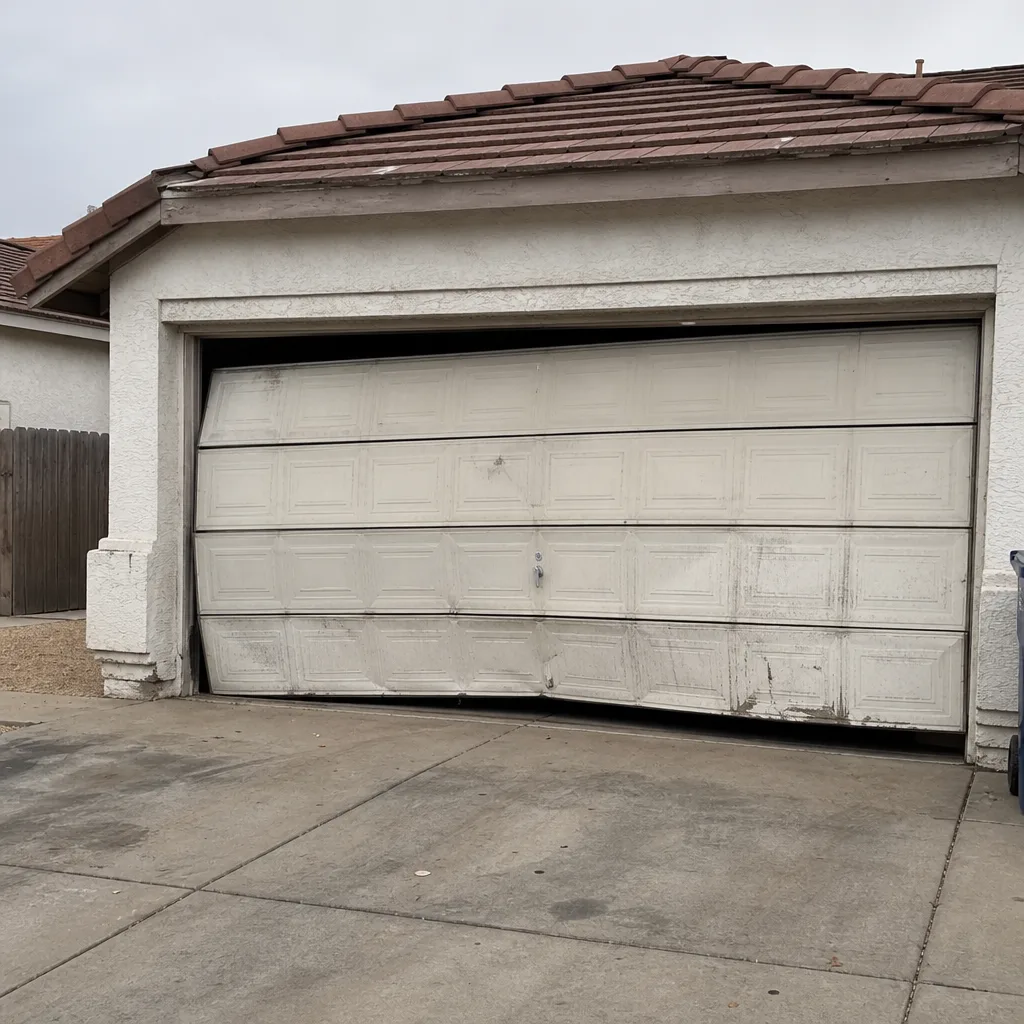 Before
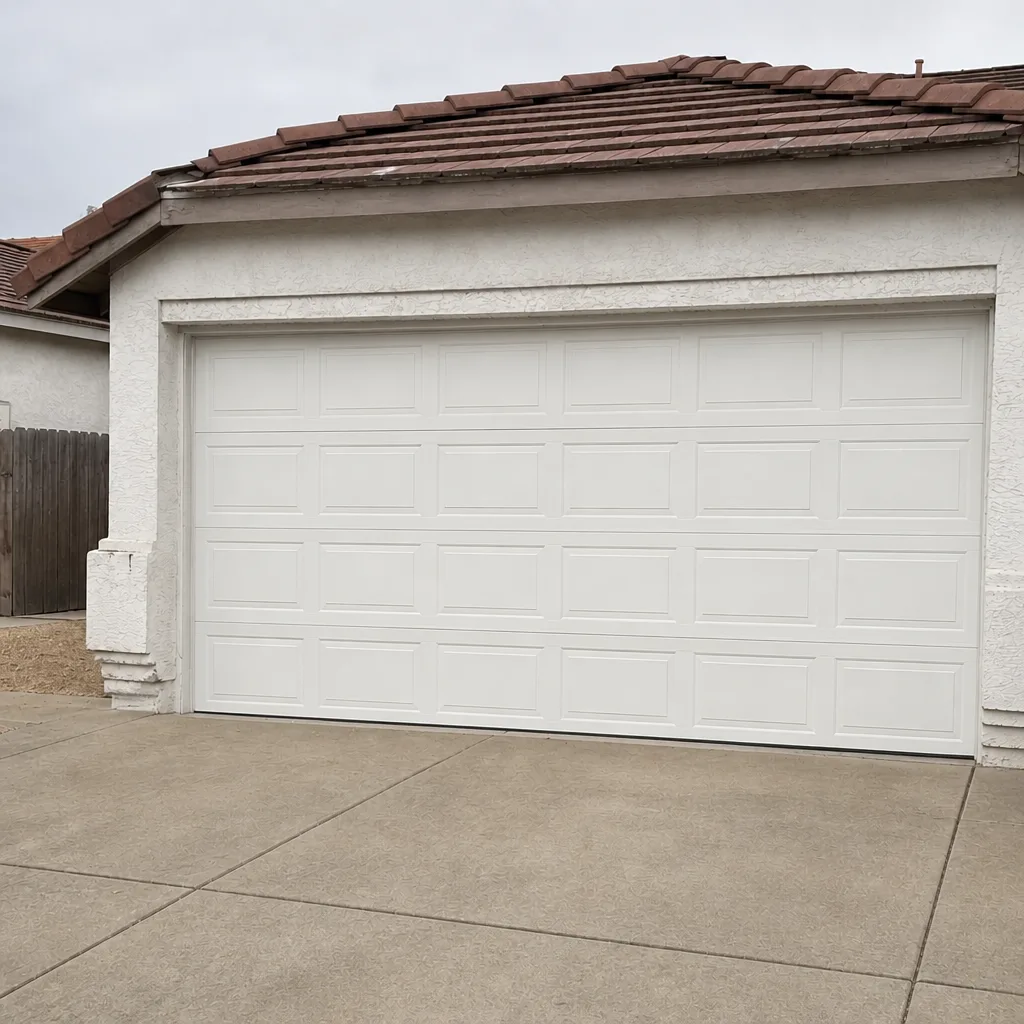 After
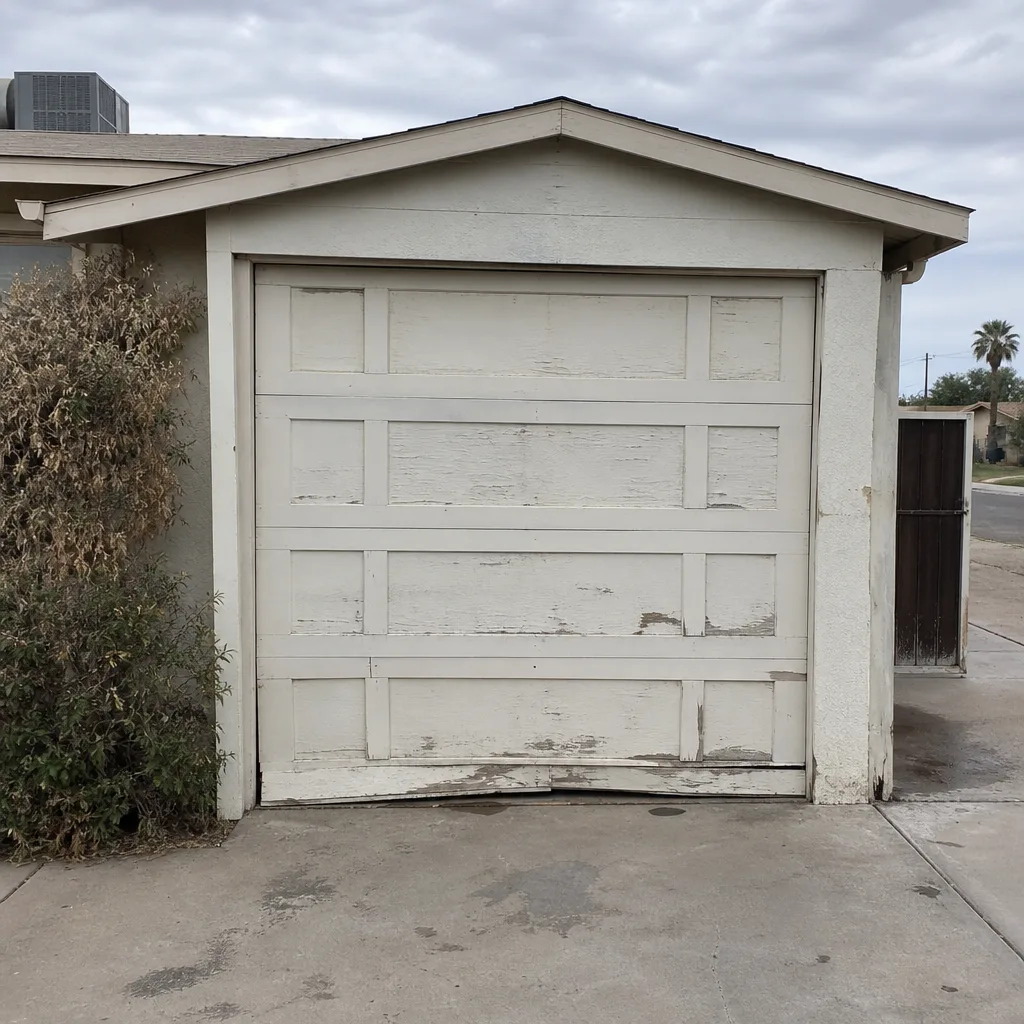 Before
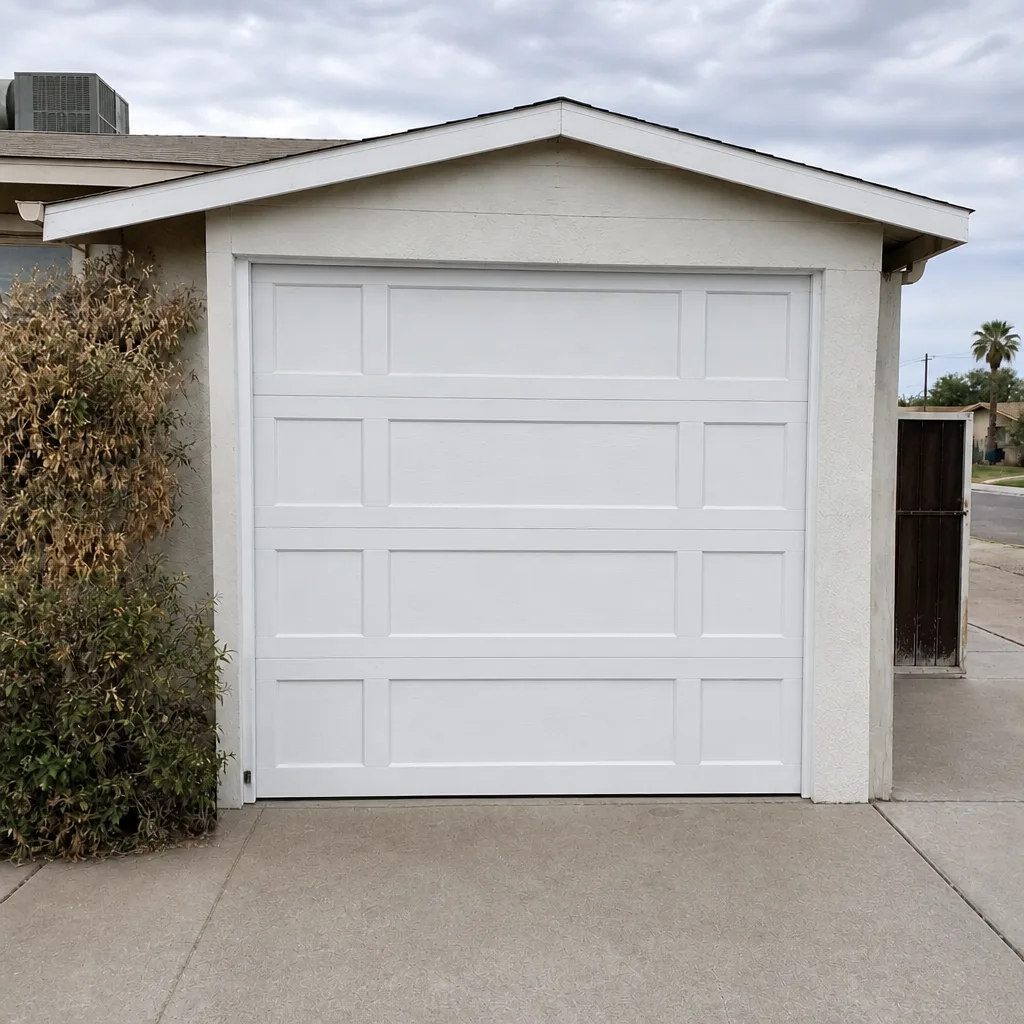 After
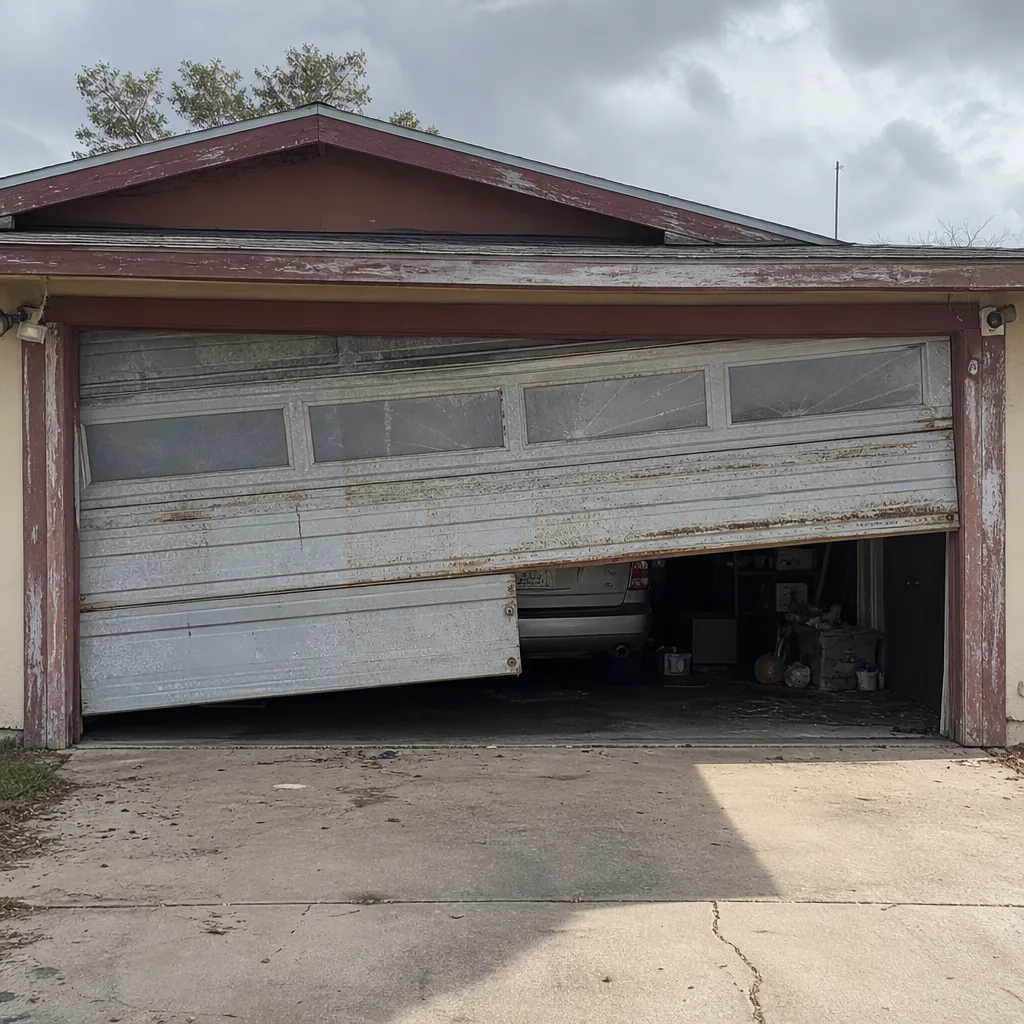 Before
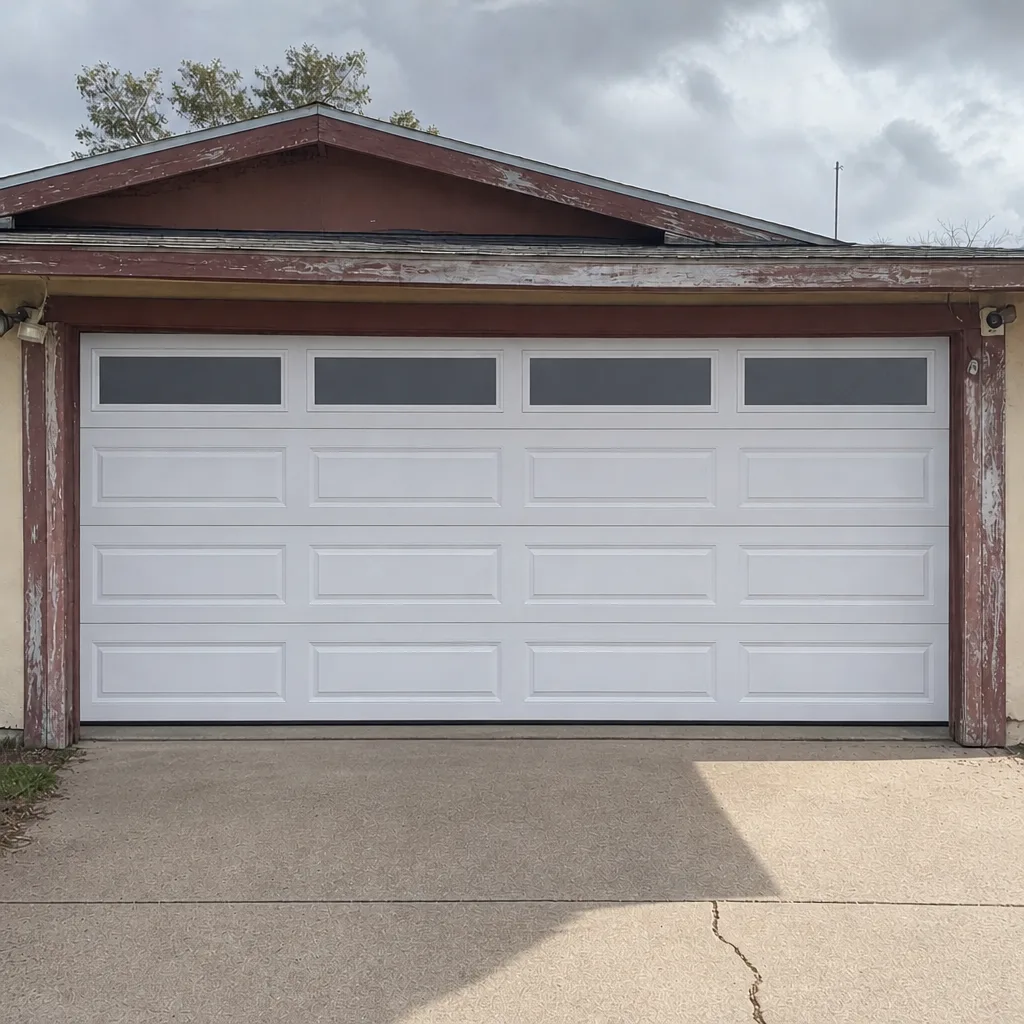 After
Safety: Springs, Cables, and Electricity
Two parts of a garage door system are genuinely dangerous to touch: the springs and cables, and the electrical side of the opener. Torsion springs are under high tension and can cause serious injury if handled without the right tools and training. The same goes for the cables that run alongside them. On the opener, the wiring and the high-voltage connections are a shock risk. We include this because a real garage door specialist flags the danger every time. A trained technician has the tools, the training, and the insurance to work on these safely. The rest of the door (seals, rollers, hinges, cleaning) is manageable for most homeowners, but leave springs, cables, and electrical work to a professional.
Common Mistakes to Avoid
- Ignoring the bottom seal until it’s gone. In Peoria sun, a hardened seal fails faster than people expect. Replace it when it stops making contact, and you’ll keep dust, heat, and grit out of the garage.
- Letting dust build up in the tracks. After a West Valley dust storm, grit left in the tracks wears out rollers and stresses the door. Wipe them out rather than waiting for a problem.
- Replacing a whole door because of one unfamiliar brand. An unfamiliar label is not a reason for replacement. A competent technician diagnoses the system in front of them, whatever brand it is.
- Buying on the price tag alone. A door tested to national specs may not hold up to Peoria’s heat and UV. Read the finish, the whole-door insulation rating, and the warranty terms, not just the sticker price.
- Skipping the wood maintenance. A wood door that goes a long time without resealing in this sun will crack and fade sooner than a steel door would have. If you choose wood, expect to maintain it.
- Overlooking orientation when choosing a door. A plain door on a north-facing garage is fine; the same door on a south-facing garage benefits from a tougher finish and more insulation.
- Assuming any glass of water and a wrench will do it. That’s a joke. But springs and opener wiring are genuinely not DIY territory. This is the big one.
When to Call a Professional
Some things are worth a call: a broken spring, a door that won’t open evenly or comes off its track, a door that shudders and slams, an opener that runs but won’t move the door, and a bottom seal that’s worn through. Garage door work is our only trade, and our technicians have up to 8 years of experience across LiftMaster, Chamberlain, Genie, Clopay, Amarr, Wayne Dalton, Craftsman, and Raynor equipment. If the door is failing on a day you need it working, same-day service is the goal. If it’s a new door or replacement, that work is measured and scheduled. Either way, Stellar Garage Door Service offers free estimates in Peoria. Call (833) 620-5171 for a free estimate.
Frequently Asked Questions
A spring repair typically runs $180 to $340 for one spring, and a matched pair costs about twice that. Opener repairs vary with the mechanism and are quoted on the estimate. Prices are estimates, and the written quote you approve sets the final price. Call (833) 620-5171 for an exact quote; estimates are free.
A quality steel door typically lasts the longest in this climate because steel resists UV and heat well, while wood needs more frequent resealing to survive the sun. Composite lands between the two. Orientation matters too: a south- or west-facing door ages faster than a shaded one. Regular seal and track checks go a long way.
Yes, most repair work is done same day. A broken spring, a stuck door, or an opener problem is typically handled on the spot. We answer 24/7, and fast dispatch runs 7am to 7pm, Sunday through Friday. A call outside dispatch hours is booked into the next opening. New doors and full replacements are measured and scheduled, not same-day.
A garage door that matches the neighborhood’s architecture supports resale because it’s one of the most visible surfaces from the street. Matching the style and color to the area’s prevailing look is usually safer than a bold design. Clopay and Amarr both offer styles suited to this region’s homes.
Many cities require a permit for structural or electrical changes, so check with the city of Peoria’s building department before scheduling new construction or major changes to the door and opener system. A straight like-for-like door swap often doesn’t, but confirm rather than assume. We’re happy to talk through the scope so you know what to ask.
Yes, we use state-licensed, insured garage door technicians, and we can work with your insurer when a claim is involved. Garage doors are the only service we perform, so our people are trained on door and opener systems specifically, not split across unrelated trades. Call (833) 620-5171 for an exact quote; estimates are free.
The Bottom Line
Your garage door in Peoria is a thermal barrier, a security layer, and a curb-appeal anchor, all at once, and it’s fighting more sun and heat than most national advice assumes. Choose a material that suits your shade and your maintenance appetite, give a south- or west-facing door a tougher finish and more insulation, keep up with your bottom seal and tracks after dust storms, and match the style to the neighborhood. Read the spec sheet for whole-door insulation, finish quality, and warranty terms. Most of all, repair first when repair makes sense, and let a specialist who works on the brand you already have make that call. Stellar Garage Door Service is a garage-door-only specialist covering LiftMaster, Chamberlain, Genie, Clopay, Amarr, Wayne Dalton, Craftsman, and Raynor. Call (833) 620-5171 for a free estimate. We answer 24/7. Fast dispatch from 7am to 7pm, Sunday through Friday. You’ll get an upfront price, agreed before any work starts, and a free written estimate in writing. Your door. Any brand. Handled. Learn more about Stellar Garage Door Service.
Written by the team at Stellar Garage Door Service.